

# That Time Rome Had A Transgender Child Emperor
Table of Contents
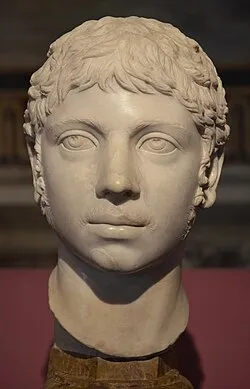
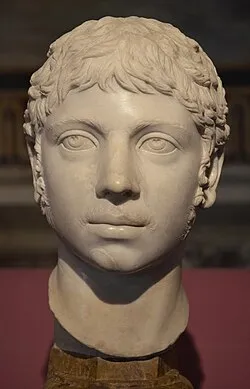
In the year 217 CE, the Roman Empire was in political crisis, yet again. The emperor Caracalla, beloved by the military and hated by everyone else, had just been assassinated. His general Macrinus had stepped in to fill the power vaccuum. His challenger for the throne? Caracalla’s bastard daughter, a fourteen year old transgender theater kid from Syria. Guided by the powerful matriarchs of the Severan Dynasty, she would win over the army, defeat Macrinus, and assume the throne, leading to one of the most unique reigns in Roman history. The new empress would be remembered by her hedonistic obsessions, her atypical sexuality, her disdain for the senatorial class, and for erratic bursts violence. Above all else she would be known for doing the unthinkable: dethroning Jupiter and replacing him in the Roman pantheon with the Arabian sun god Elagabal. As such, she’s remembered today as the emperor Heliogabalus. She was one of the worst to ever do it.
I’m using hyperbole to hook you in here. Something I want to get across is that Heliogabalus’ reign was probably less weird to the Romans (on some vectors, anyway) than it may seem to us today. Her story is a really interesting window into how gender, race, and religion were viewed in Imperial Rome. It’s also a story of the lengths to which women would go to sieze and wield power in Rome’s supremely patriarchal society. Without legal authority of their own, what sorts of behavior they would tolerate in their puppet before finally deciding to leave her to the angry mob?
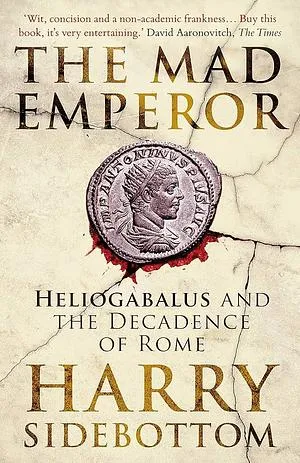
The thing about Heliogabalus’ reign is that its hard to distinguish the real history from the posthumous slander. Did she really crush dinner guests in a flood of flower petals? Did she really have a secret police unit for finding her the empire’s biggest cocks? Was she really transgender? There are a lot of competing perspectives. Heliogabalus is variously remembered as either a world-historical hedonistic freak (as the Roman historians and 20th c. French avant-garde would have it) or as a queer icon for those hungry for gay or transgender representation in history. I became obsessed with Heliogabalus earlier this year while listening through Mike Duncan’s classic podcast The History of Rome and I had to take a detour into an actual academic opinion on the matter to sort out what’s what. I went with Harry Sidebottom’s 2022 book The Mad Emperor: Heliogabalus and the Decadence of Rome. It’s maybe not the end-all-be-all of Heliogabalus opinions, but I liked it a lot and it’s my main source for this post, and I’ll be following a lot of Sidebottom’s cues.
Roman Gender and Historiography
One cue I will not be following Sidebottom on here is that I wont be using he/him pronouns for Heliogabalus. This is a tricky topic because the Romans did not have the social concept of “being transgender” (despite trans people always existing, obviously). However, Heliogabalus is remembered for such behavior as dressing in womens’ clothing, asking to be referred to with feminine terms of address, and she even requested that doctors perform what we’d today call gender affirming surgery. If somebody assigned male at birth did these things today we’d call them a transgender woman, so I’ll be using she/her pronouns in this post.
That being said, it’s valid to ask whether any of those anecdotes are even true, and I want you to take my stance with a grain of salt. Everything we know about Imperial Rome comes from two vectors: archaeology, and surviving writings from the Romans themselves. Another social concept the Romans lacked was “neutral history”. Writing was an expensive, high-skill task, so if something was getting written down at all, it was being commissioned by the senatorial class. And the senators were a group of people who, definitionally, controlled the top 1% of the top 1% of Roman wealth (to paraphrase Bernie Sanders). The vast majority of the surviving records are written from their perspective, and they absolutely hated Heliogabalus.
Roman historians had a habit of making libellous claims to ruin the reputations of disfavored figures. We can tell it’s libel today because, aside from being hyperbolic, it tends to fall along common tropes: a bottom in a male-male relationship, an “evil step-mother” that sabotages her step-son, etc. So, it’s entirely possible that Heliogabalus’ transgender allegations are queerphobic libel, especially as they dovetail with Romans’ existing stereotypes about effeminate Middle-Easterners. The hatred had to come from somewhere, but did it start with Heliogabalus’ actual gender identity, or did it start with the racism?
Now, as Harry Sidebottom points out:
The normal modern scholarly response to many of the above stories [of Heliogabalus’ gender/sexual preferences] is to dismiss them as mere topoi: conventional accusations applied after death to Emperors disliked by the next regime, and thus at best their truth is unknowable, or they are complete fiction. Yet if that was the case, they should be applied indiscriminately. (p. 257)
His argument is, essentially, that since other “bad” emperors like Nero and Caligula aren’t accused of requesting feminine terms of address or gender affirming surgery, these claims have increased crediblity due to their uniqueness. I will be working from that assumption here, not just because I find Sidebottom’s argument convincing, but also because I think it lends a more interesting framing of Heliogabalus’ behavior.
Historical Context
I will now stop talking about gender and begin Infodumping About The Roman Empire Like A Man.
The Severan Dynasty was havily influenced by its women. The first of these was Julia Domna, the princess of a Syrian dynasty of client-kings. She married the future emperor Septimius Severus, and then became empress when he emerged victorious from the civil war known as The Year of the Five Emperors, in 193 CE. Together, they had two sons, Caracalla and Geta, and according to imperial propaganda they were one big happy family. Behind the scenes, Caracalla and Geta despised each other.
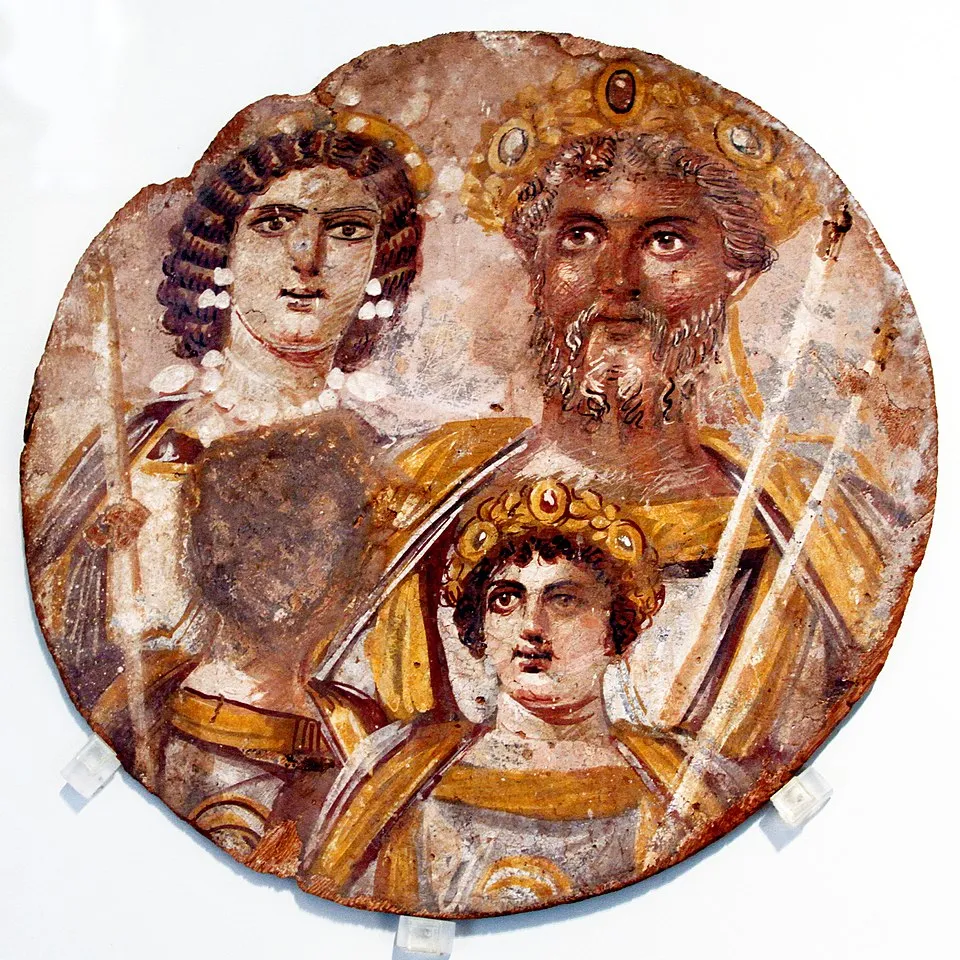
Domna is notable for the degree of political power she weilded as empress throughout the reigns of her husband and sons. She brought her sister Maesa’s family to the imperial court in Rome with her, which included Maesa’s two daughters, Soaemias and Mamea, and all of the daughters’ husbands, who got cushy government jobs. In early 204 CE, Soaemias gave birth to Sextus Varius Avitus Bassianus - the future Heliogabalus. Baby Heliogabalus spent the first four years of her life being taken care of by these women (and their slaves) in the imperial palace.
A theme of Roman history is that the emperors who were raised in the imperial household were the absolute worst, having never heard the word no in their entire lives. This was the case for Caracalla and Geta (and will be the case again for Heliogabalus). Septimius Severus was a pretty competent emperor in terms of maintaining peace and order, but he struggled to get his heirs to take responsibility. To this end, he took the entire imperial household on a vacation to Scotland, by which I mean, Rome was invading Caledonia. Heligabalus’ father, Sextus Varius Marcellus, was appointed Procurator of Britannia, and the family packed up and moved to Eboracum (aka modern York). So that’s where Heliogabalus was growing up from the ages of four through seven.
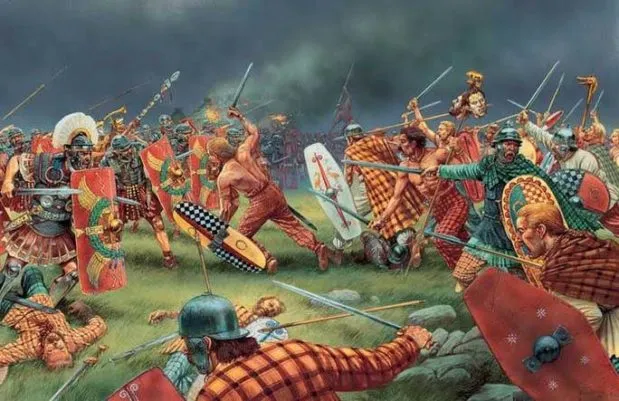
It really speaks to the interconnectedness of the ancient world that a Libyan emperor and his Arab wife were raising their grand-niece on tea and crumpets and fish and chips and whatnot. I’m joking, of course, but at this point in history it was not strange for a provincial from a good family to become the emperor (although Septimius Severus was the first to come from a non-Latin background!). The Pheonecians in Libya and the Arabs in Syria were as Roman (as in: the empire) as the Celts in Gaul and Iberia were. This isn’t to say the Romans (as in: the city) weren’t racist - they held long-standing anti-Phoenecian prejudice ever since the Punic Wars, for one example. That definitely influenced elite perception of the Severan Dynasty for whom “Phonecian” was their most prestigious ethnic identity. At least the Phonecians had been civilized rivals, compared to the “barbaric” Syrians and Arabs.
To get back on topic, the military campaign did not help Caracalla and Geta’s relationship. Septimius Severus died while there in 211, upon which the brothers ended the war and relocated everyone back to Rome, where Caracalla had Geta murdered in front of their mother. Marcellus, a Caracalla partisan, was promoted to Praetorian Prefect, and was placed in charge of a massive political purge in which twenty thousand Geta supporters were killed. The imperial family was safe in the palace, but there’s no way young Heliogabalus would have been unaware of her father’s involvement in these killings.
For his loyalty during the coup, Marcellus was appointed governor of Numidia (basically northern Algeria) in 213. Heliogabalus stayed in Rome as, functionally, a political prisoner, to prevent Marcellus from getting any of his own coup ideas. From the ages of seven to twelve, Heliogabalus grew up in Rome’s corporal punishment-centric educational system while learning exactly how not to govern from Caracalla’s famously tyranical stint as emperor. As I said before, great-aunt Domna had an important administrative role in Caracalla’s regime, as Caracalla didn’t care much for governing, which will become a theme in this family. Heligabalus never saw her father again as Marcellus died while in Numidia in 215.
In 217, Caracalla was overthrown in a coup by the general Macrinus. Macrinus ordered Maesa’s side of the family to return to their ancestral home in the Syrian city of Emesa, a place Heliogabalus had never actually been. Domna, hearing the news that the dynasty was ruined, killed herself.
The Priests of Elagabal
The Emesene Dynasty — Domna’s side of the family — were Arabs who ruled a culturally Phoenecian kingdom along the Orontes River. Their capital, Emesa, is modern-day Homs, Syria. Today the city has been severely affected by the Syrian Civil War.

The region was ruled for centuries by the post-Alexander, culturally-Greek Seleucid empire before being annexed into the Roman province of Syria during the reign of Augustus. To maintain their local authority in the wake of this shift, they pivoted from kings to high priests. The city’s patron god was called Elagabal.
Paganism in the Levant during this period looked a lot like the paganism of Greece or Rome, albiet with regional characteristics. They had many gods: Dagon, Moloch, Ba’al (analagous to Jupiter/Zeus), the ones that have made their way into modern culture as “demons” due to their opposition to the god of the Old Testament. Typically, a city would have a particular patron god. After centuries of Hellenization under Greek overlords, Greek/Roman gods were included in the roster as well, and temples were built in the Greek style. But, rather than housing life-sized statues of the dieties, they had a tradition of worshipping sacred stones called “baetyls” (cognate with “beth-el”, literally “house of God”) which embodied a certain diety in the same way a statue would. Often these baetyls were meteorites, because why wouldn’t you worship a meteorite.
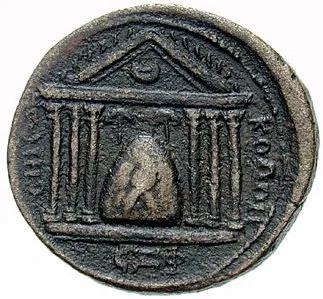
Several of these baetyls are still around. Most notably, the Black Stone embedded in the Kaaba in Mecca is a baetyl that established Mecca as a pilgrimage site in pre-Islamic times. It’s a bit like how the Panetheon in Rome became a Christian church.
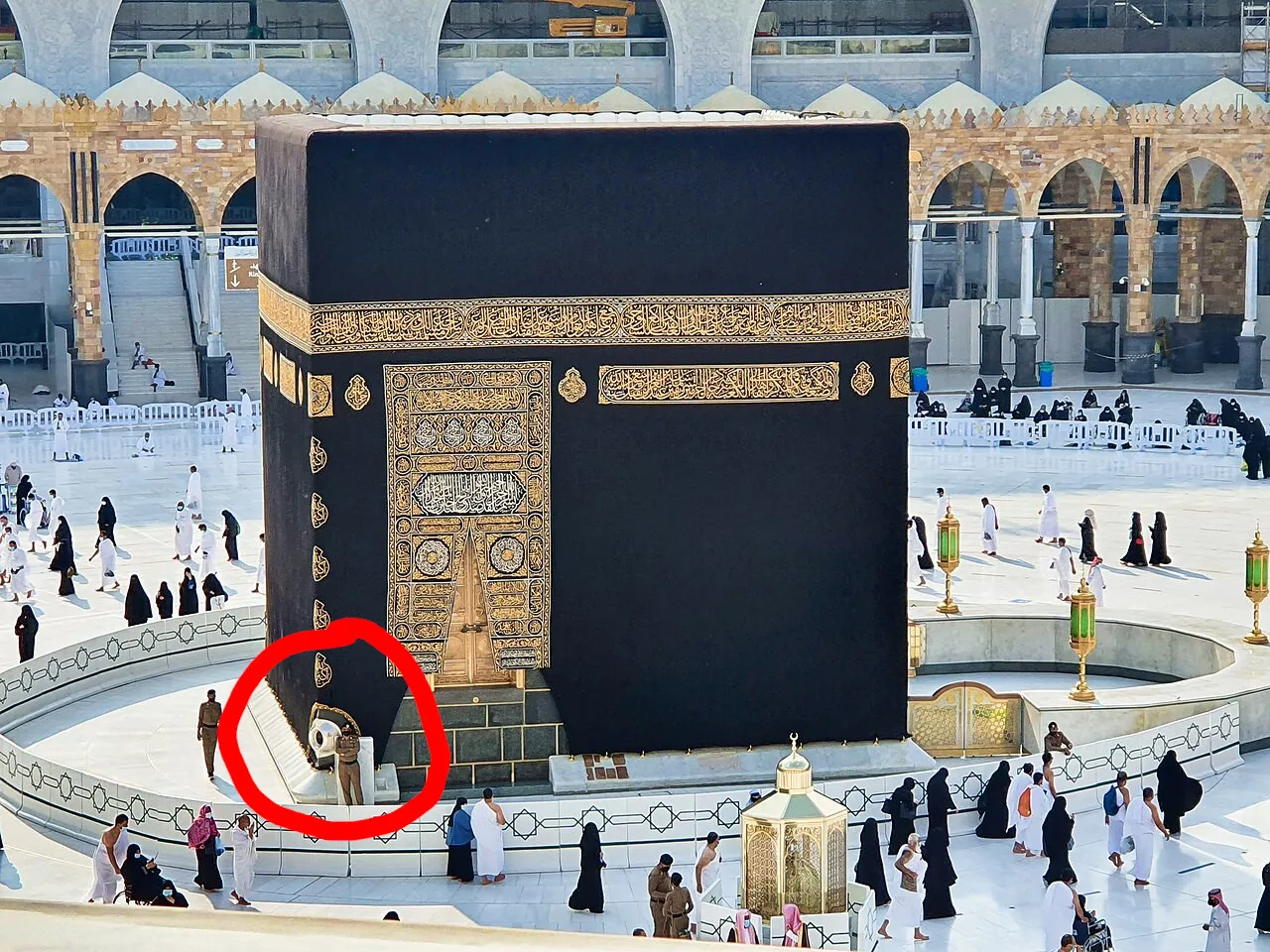
I mention this all to say that, while the cult of Elagabal may seem exotic to us today, the cult of Elagabal was intelligible to the Romans of the city of Rome in a way that, for example, Christianity was not.
So to get back on topic, Elagabal or Elagabalus was the local god of Emesa and was identified with a large, black, conical stone. His name is a Latinization of the Arabic “Ilah al-Jabal” which literally means “god of the mountain”. He was a sun god and the Romans identified him with their gods Sol and Helios (thus the disparaging nickname “Heliogabalus” for the fanatic emperor). Whenever Maesa brought her family back to Emesa, the family resumed their roles as the priests of Elagabal’s temple, and since Heliogabalus was now the eldest “man” in the family, she became the high priest of Elagabal at the age of twelve.
We don’t know much about the beliefs of the people that worshipped Elagabal, but we do know that the high priest performed a sun-welcoming ceremony every morning at dawn that involved extravagant outfits, music, and dance. At the risk of leaning on stereotypes, it’s not hard to imagine why a queer child would enjoy this role. If we’re assuming Heliogabalus grew up queer, which I am, it must have been very difficult to fit in in Rome’s crushingly patriarchal society. To go from a culture where deviations from the expectations of a macho, ascetic, warrior Man got you beaten, to a new culture in which heretofore effeminate behaviors are expected and praised, must have been immensely freeing. On top of that, Heliogabalus was suddenly rocketed from being the property of her mother, to be seen and not heard, a minor relative of the royal family, to wielding huge amounts of responsibility and actual divine authority via daily compulsory Broadway performances. Heliogabalus clearly adored being the high priest of Elagabal, because, unlike the other imperial Emesans, she will always put those responsibilities first. She’s bringing that big rock to Rome with her.
The Counter-Coup
Something to understand about gender roles in ancient Rome is that if you were a woman, you attached yourself to a man or you had nothing. Thus, Domna’s suicide. For Maesa, who was accustomed to the power and influence that came from being the empress’ sister, Caracalla’s death was a deeply bad situation for both her and for her family. They were on thin ice with the new emperor, Macrinus, and all their power now flowed through a twelve-year-old. So, Maesa and her daughters concocted a plot. This Just In: it turns out that Heliogabalus was, in fact, Caracalla’s bastard son, and thus has the strongest claim to the throne. Do not think too hard about this making Soaemias an adultress who cheated on her husband with her first cousin. I get the vibe that they family didn’t like Soaemias very much, based on what they did to her later.
The legions had adored Caracalla because of how much he and his father had paid them to keep them loyal, and the family resemblance was enough that they were convinced to join Heliogabalus’ cause. After a series of battles, Macrinus was defeated and Heliogabalus ascended to the throne at the age of fourteen.
So, what did Heliogabalus do with this power? Whatever she goddamn wanted, is what.
This post is getting incredibly long, so it will continue in Part II.